

Catastrophic & Personal Injury Psychology: The Definitive UK Rehabilitation Code, Medico-Legal & Clinical Compendium
An executive master reference combining 2025/26 DWP CRU data, the APIL Best Practice Guide on Rehabilitation (5th Edition), and NICE NG211 with lived-experience and condition-specialist clinicians, flat £125 assessment-first governance, inclusive reporting at no extra charge, and post-block step-down protection that shields compensators from rolling extensions.
Immediate Specialist Matching Across Six Core Catastrophic Trauma Streams
♿ Spinal Cord Injury (16+)
Tetraplegic Psychologist lead • Bedrest video • 70m AAC / eye-gaze • Dysreflexia safety.
🦿 Amputee & Limb Loss (16+)
100% amputee therapists • Phantom pain GMI & Mirror Therapy • Limb-salvage & OI prep.
🧠 Brain Injury / TBI (Strictly 18+)
Mild-to-moderate TBI, PPCS & Stroke • Paced 60m w/ 2x 5m sensory breaks • No homework.
⚡ Epilepsy & Seizures (16+)
Post-Traumatic Epilepsy (PTE) & FDS • Keppra rage & ASM fog • SUDEP & DVLA loss.
👁 Traumatic Sight Loss (16+)
Blind & VI Psychotherapists/Psychologists • Screen-free audio • Facial burns & Charles Bonnet.
🤟 Deaf BSL & Trauma (16+)
Direct 1-to-1 BSL psychotherapy (no interpreter lag) via linked sister org Deaf4Deaf.
Six Defensible Clinical & Commercial Guarantees for Case Managers, Solicitors & Compensators
Engineered for BABICM, CMSUK, and IRCM Case Managers, APIL solicitors, Court of Protection deputies, and insurer technical claims handlers:
1. Pre-Liability Rehabilitation Mandate
Early psychological intervention proceeds collaboratively under The Rehabilitation Code (2015) and the APIL Best Practice Guide on Rehabilitation (5th Edition, May 2025) prior to liability admission - preventing central pain sensitisation, prosthetic abandonment, and care-package collapse.
2. Lived Experience = ~15% Faster Stabilisation
Across severe SCI, Limb Loss, Sight Loss, Cerebral Palsy, and Deaf BSL pathways, lived-experience clinicians (plus dedicated neuro-specialists on mild-to-moderate Brain Injury, Epilepsy & ASD/ADHD) skip the 3-to-4 session "therapist education phase", reducing the number of sessions needed by ~15% (Finlay et al., 2025).
3. Assessment-First Sign-Off Protocol
No arbitrary upfront packages. A £125 Initial Assessment produces a structured Treatment Plan backed by hard calibrated data (ITQ Complex PTSD, WHODAS 2.0% functional baseline, AAQ-II & ReQoL-10) for joint compensator sign-off before ongoing sessions start.
4. No Treatment Drift + Post-Block Step-Down
No rolling extensions: clinicians treat strictly to agreed Goal-Based Outcomes (GBOs) and discharge (extending only on documented major life shocks). Afterwards, clients can continue on our heavily subsidised self-pay (UK-wide) or across most NHS areas in England and Wales we can apply directly to the NHS via our 10-year NHS relationship.
5. Complete Commercial Predictability
Flat £125 assessment fee (£2.50/min pro-rata for 60m/70m), Mid-Term Reviews and Discharge Reports included at no extra charge, and monthly invoicing in arrears on 28-day credit terms itemising CRU/claim references and attended dates.
6. UK-Wide Treating Firewall (CPR Part 35 & Scots Law)
Clinicians act solely as treating rehabilitation providers and never author expert witness reports on liability, causation, or quantum under CPR Part 35 (England & Wales), Chapter 42A / Ordinary Cause rules (Scotland), or NI rules.
The 5-Stage Assessment-to-Sign-Off Workflow (Preventing Unauthorised Spend)
Fast Instruction & Quote
Case Manager submits enquiry via encrypted portal or email; we return itemised INA quote, clinician match & anonymised CVs in 24-48h.
Accessible Pre-Intake
Claimant completes digital screener at home (compatible with screen-readers, voice/AAC, BSL or assisted phone call) + 6-domain WHODAS 2.0%.
Conversational Assessment
50-min unhurried dialogue within 7 working days. No tick-box form-filling in session and no time wasted explaining disability.
Calibrated Treatment Plan
Post-session clinical audit of AAQ-II, ITQ (PTSD vs C-PTSD), ReQoL-10 & GBOs scopes exact, evidence-justified session dosage.
Insurer Sign-Off & Delivery
Ongoing therapy begins strictly upon written compensator sign-off; Mid-Term & Discharge Reports included at no extra charge.
Master Portal Architecture: All 16 Unmerged Chapters & Medico-Legal Glossary
Part I: Legal & Due Diligence (Ch. 1-4)
Ch. 1: DWP CRU Data, NG211 & Pre-Liability Ch. 2: £125 Gateway, Part 35/Scots & INA Box Ch. 3: No Treatment Drift & Step-Down Shield Ch. 4: CQC Scope, Faculty & Insurance PDFPart II: 5-Phase Engine (Ch. 5-8)
Ch. 5: Phase A - Accessible Intake & WHODAS % Ch. 6: Phase B - Conversational Assessment Ch. 7: Phase C - PHQ-9 vs AAQ-II Contrast Table Ch. 8: Phases D & E - 4 Ps Risk, GBOs & 15% SpeedPart III: Tier 1 & Tier 2 Hubs (Ch. 9-10)
Ch. 9: Tier 1 (6 Trauma) + Tier 2 (6 Intersecting) Ch. 10: CRPS, Pain Loops, Vestibular & Tinnitus Ch. 11: Paul v Royal Wolverhampton Carer Gap Ch. 12: MDT Liaison & Preventing "IME Crash"Part IV-V: Capacity, SLAs & Benchmarks
Ch. 13: MCA 2005 Deputies & Access to Work Ch. 14: Binding SLAs, DAAP & BACS Invoicing Ch. 15: 4-Provider Benchmark Matrix Ch. 16: 10 Split FAQs, A-Z Glossary & SourcesThe Epidemiological & Financial Imperative for Early Catastrophic Psychological Rehabilitation
1. 2025/26 DWP CRU Scale & NICE NG211 Psychological Morbidity
Official Department for Work and Pensions (DWP) Compensation Recovery Unit (CRU) figures record 435,565 personal injury claims registered in Great Britain in 2025/26 (spanning motor, employer, public, and clinical negligence liability), alongside Health and Safety Executive (HSE) data documenting 680,000 non-fatal workplace injuries annually. Under NICE Guideline NG211 (Rehabilitation after traumatic injury), 30% to 50% of serious physical trauma claimants develop comorbid major depressive disorder (ICD-11 6A70), collision/ICU post-traumatic stress disorder (6B40/6B41), or severe adjustment disorder (6B43).
2. Pre-Liability Commissioning & Preventing Quantum Inflation
Both The Rehabilitation Code (2015) and the APIL Best Practice Guide on Rehabilitation (5th Edition, May 2025) place an explicit collaborative duty on claimant solicitors and compensators to consider early rehabilitation prior to formal liability admission. Leaving trauma unaddressed allows central neuropathic pain sensitisation (NICE NG193 & CG173), kinesiophobia, prosthetic/equipment rejection, and secondary marital breakdown to entrench - multiplying long-term care and loss-of-earnings quantum.

Transparent Unit Pricing, No Report Markups & Uncompromised Joint-Instruction Neutrality
⚖ Eliminating Both the Assessment Markup Trap & Administrative Report Billing
Traditional private neuro-rehab clinics routinely charge £300 to £600+ for an upfront assessment and £150 to £400+ extra for every progress letter. DisabilityPlus operates a flat £2.50/minute unit tariff from intake to discharge:
- £125.00 Flat Initial Clinical Assessment (50 mins): No upfront assessment markup (£150.00 pro-rata for 60-minute fatigue-paced sessions with 2x 5-minute rest breaks; £175.00 for 70-minute extended AAC / eye-gaze appointments + written post-session summary).
- Mid-Term & Final Discharge Reports Included at No Extra Charge: Halfway clinical reviews and audited discharge outcome summaries (AAQ-II, ReQoL-10, WHODAS 2.0%, GBOs) carry no administrative report fees.
Ending Open-Ended Therapy Extensions: Goal-Locked Discharge + NHS & Subsidised Continuity
1. Written Sign-Off Before Therapy Starts
Following the £125 assessment, an itemised Treatment Plan specifying exact clinical session dosage and measurable Goal-Based Outcomes (GBOs) is issued to the Case Manager and compensator; ongoing sessions start strictly upon written authorisation.
2. The "Major Life Shock" Extension Rule
We never submit rolling 6-session extension requests. Therapy concludes once GBOs are met. Extensions are requested solely if an objective, unforeseen external life shock occurs after therapy begins (specifically documented marital breakdown/divorce, formal carer abuse/neglect, loss of adapted housing/eviction, or acute medical re-hospitalisation).
3. Post-Block NHS (England & Wales) & Subsidised Self-Pay
Protecting Insurers From Repeat Extensions: Once allotted Rehab Code sessions finish, clients anywhere in the UK can step down onto our heavily subsidised self-pay rates (£50/£60/£70), or across most NHS areas in England and Wales (excluding Scotland & NI NHS areas) we can apply directly to the NHS for ongoing funding via our 10-year NHS relationship.
Pre-Verified Corporate, Regulatory, Faculty & Information Governance
1. Statutory CQC Exemption (S.I. 2014/2936 Sch. 1 Para 4(3))
DISABILITY+ LTD. (Company No. 13411626; and for Deaf claimants, linked sister company DEAF4DEAF LIMITED, Company No. 10070652) delivers 100% remote standalone talking therapy via HCPC, BPS, BACP, UKCP, and NCPS registered Psychologists and Psychotherapists without medical prescribing or care premises - statutorily exempt from CQC registration under Schedule 1, Paragraph 4(3) of S.I. 2014/2936 (confirmed twice in writing by CQC).
2. WriteUpp ISO/IEC 27001 EHR & UK GDPR Art. 9
Clinical records and telehealth run on WriteUpp (Pathway Software Ltd, ICO Reg. Z2865352, NHS supplier for 10+ years), audited to ISO/IEC 27001 (Certificate 275372022), UK GDPR Article 9 special-category health data standards, 256-bit SSL encryption, mandatory 2FA, and Regulation 17 immutable note locks.
3. Tripartite Disclosure & Raw Note Protection
Case Managers and compensators receive the Initial Assessment Formulation, GBO Treatment Plan, halfway Mid-Term Review, and Final Discharge Summary. Raw clinical process notes remain therapeutically protected, releasable solely under formal CPR Part 31 (or Scottish/NI court disclosure rules), explicit claimant/Deputy consent, or court order.
4. Commercial & £5m+ Clinical Indemnity (FHBI4471823XB)
Underwritten via Simply Business / HDI Global Specialty SE & Great Lakes Insurance UK Ltd (Policy Ref FHBI4471823XB, insured name DisabilityPlus Complex Care Limited, valid 06/05/2026 to 05/05/2027): £10,000,000 Employers' Liability, £1,000,000 Public Liability, plus practitioner clinical indemnity exceeding £5,000,000 per claim.
⬇ Download 2026-2027 Employers' Liability Certificate (PDF)
Why DisabilityPlus Employs Both Registered Psychologists (HCPC/BPS) & Specialist Psychotherapists (BACP/UKCP/NCPS)
(1) Clinical Psychology Leadership: Complex physical and sensory trauma formulations, neuro-pacing, and outcome governance are guided by senior Clinical & Counselling Psychology expertise (including Europe's only practising tetraplegic Psychologist and blind Sight-Loss Psychologists). (2) Lived & Condition-Specialist Psychotherapy Delivery: Peer-matched and condition-specialist Psychotherapists handle weekly trauma stabilisation, bodily grief, and relational containment. (3) Commercial Value & Verification: Eliminates inflated £180-£250/hr consultant surcharges (fixing rates at £125 per 50m session with inclusive reports), and every INA quote includes anonymised CVs detailing individual registration numbers and indemnity.
Pre-Consultation Digital Intake & Six-Domain ICF Functional Baseline
Before the first billable minute begins, the claimant completes a concise smart intake covering mechanism of injury, inpatient/surgical history, physical/neurological presentation, medications, and preliminary risk screening - alongside the World Health Organization Disability Assessment Schedule (WHODAS 2.0) across all six ICF domains (Cognition, Mobility, Self-Care, Getting Along, Life Activities, and Participation), establishing an objective 0%-100% functional impairment baseline prior to clinical contact.
Eradicating Both In-Session Tick-Box Exhaustion & The "Burden of Explanation"

Why Claimants Stay Engaged From Session One
Reading robotic PHQ-9/GAD-7 tick-boxes aloud to a traumatised claimant destroys rapport and triggers severe cognitive exhaustion. Our clinicians conduct Phase B as an unhurried, conversational dialogue using curated clinical prompts around sleep architecture, care-agency privacy friction, bodily grief, and trauma triggers.
No Wasted Billable Hours Explaining Disability: Because our physical/sensory clinicians personally live with disability (and our Brain Injury, Epilepsy & ASD/ADHD clinicians are dedicated specialists), claimants never waste sessions explaining suprapubic catheters, neurogenic bowel routines, autonomic dysreflexia, phantom lightning, socket sweat, or normal-scan concussion fatigue.
Overcoming the 10-to-15 Point "Somatic Floor" With AAQ-II, ITQ, ReQoL-10 & WHODAS 2.0%
On generic insurer CBT panels, raw PHQ-9 and GAD-7 checklists penalise catastrophic injury claimants for permanent paralysis, night-turn sleep breaks, prosthetic walking fatigue, spasticity, and rational medical vigilance (NICE NG222 / CG91):
| Screening Challenge | Generic CBT Panels (Raw PHQ-9 & GAD-7) | DisabilityPlus Calibrated Battery (AAQ-II, ITQ, ReQoL-10, WHODAS %) |
|---|---|---|
| Physical Spasms & Nerve Pain | Scored as psychomotor restlessness & agitation, falsely inflating psychiatric illness. | AAQ-II (7-49 pts; Bond et al., 2011): Measures psychological flexibility with no somatic disability questions. |
| Nocturnal Turns & Metabolic Fatigue | Scored as clinical depression on PHQ-9 Items 3 & 4 even when mood is improving. | ReQoL-10 (Keetharuth et al., 2018): Isolates physical flares on Standalone Item 11 so pain never distorts mental recovery. |
| Medical Vigilance (Dysreflexia / Falls) | Pathologised as "irrational generalised panic" on GAD-7 Items 1, 4 & 7. | Clinician 3-Way Exception Audit: Separates sensible medical safety vigilance from pathological anxiety. |
| Trauma Classification | Conflates single-event collision fear with entrenched self-organisation trauma. | ITQ (Cloitre et al., 2018): Formally distinguishes ICD-11 6B40 PTSD from 6B41 Complex PTSD (DSO domains). |
| Insurer Funding Outcome | Static 10-15pt somatic floor makes successful therapy look stagnant; funding cut prematurely. | Clear Empirical Proof: Demonstrates psychological flexibility & WHODAS 2.0% participation gains alongside permanent disability. |
Structured Risk Governance, 4-Phase Rehabilitation Roadmap & Faster Stabilisation
Phase D: Dynamic 4 Ps Traffic-Light Risk Matrix
Maps Predisposing, Precipitating, Perpetuating, and Protective factors across a Green/Amber/Red matrix auditing active suicidality, passive disability self-neglect (refusing pressure turns, intermittent catheterisation, skin checks, or anti-seizure medication), risk to others, and safeguarding risk from carers/financial coercion.
Phase E: 4-Phase Roadmap & ~15% Fewer Sessions
Translates priorities into 0-10 Goal-Based Outcomes across Phase 1 (Somatic Containment), Phase 2 (TF-ACT Trauma Processing - incorporating CBT principles), Phase 3 (Bodily Grief & Identity via DAT), and Phase 4 (Autonomy & Discharge). Published lived-experience matching evidence (Finlay, Brook-Rowland & Tilley, 2025) confirms eliminating introductory disability explanation reduces the number of sessions needed to reach stability by ~15%.
Tier 1: The Six Primary Catastrophic & Serious Trauma Gateways
Accepting severe and catastrophic presentations (16+) across Spinal Cord Injury, Amputation/Limb Loss, Sight Loss/Facial Burns, Post-Traumatic Epilepsy, and Deaf BSL trauma, alongside mild-to-moderate adult (18+) Brain Injury:

1. Spinal Cord Injury & Cauda Equina (Severe & Complex - 16+)
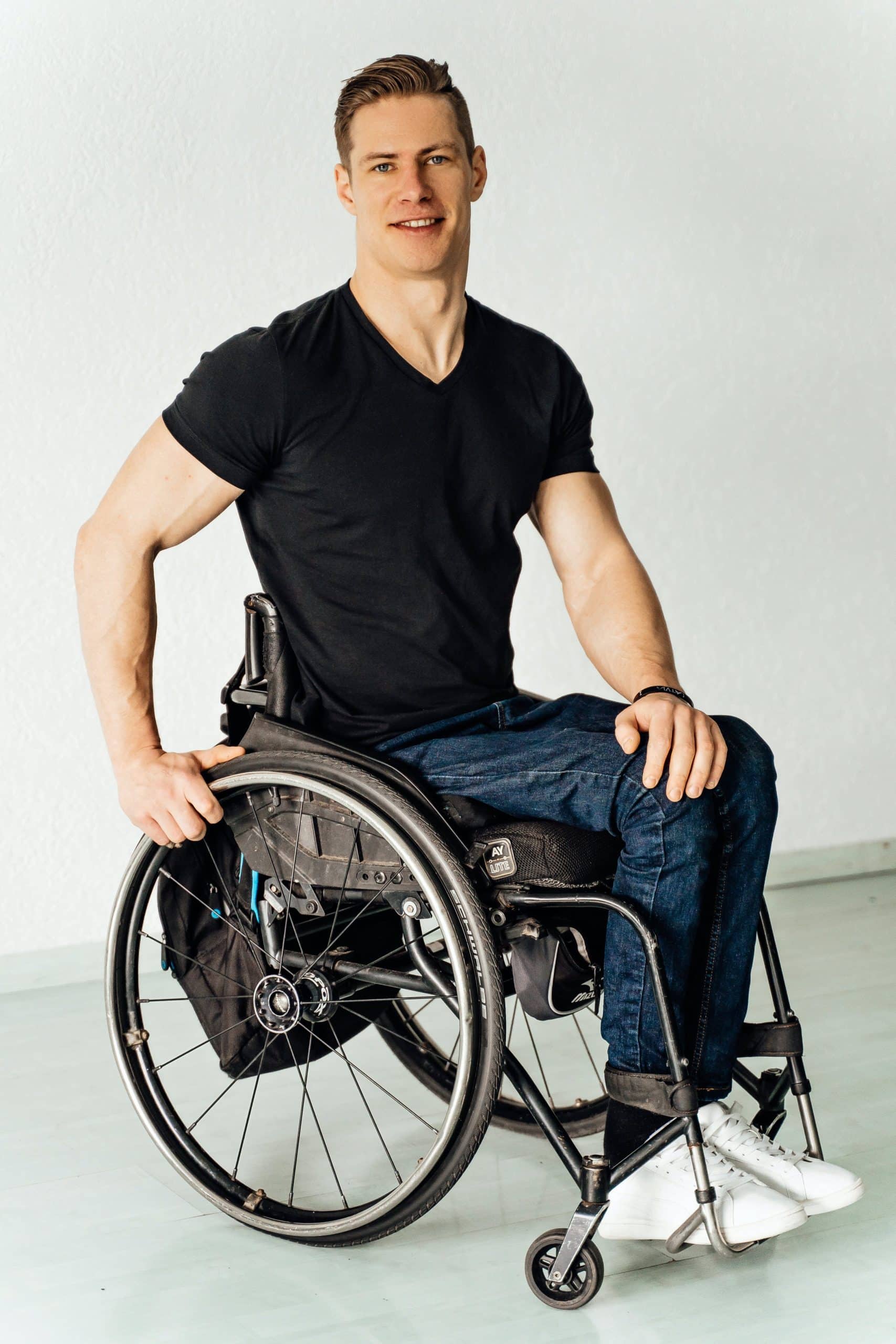
Delivered by specialist SCI Psychotherapists and Psychologists, led by Europe's only practising tetraplegic Psychologist. Features Autonomic Dysreflexia safety protocols, neurogenic bowel/bladder/sexual grief support, 70-minute extended eye-gaze/AAC pacing, and prone/supine pressure-relief bedrest video therapy.

2. Amputee & Traumatic Limb Loss (Single & Multiple - 16+)
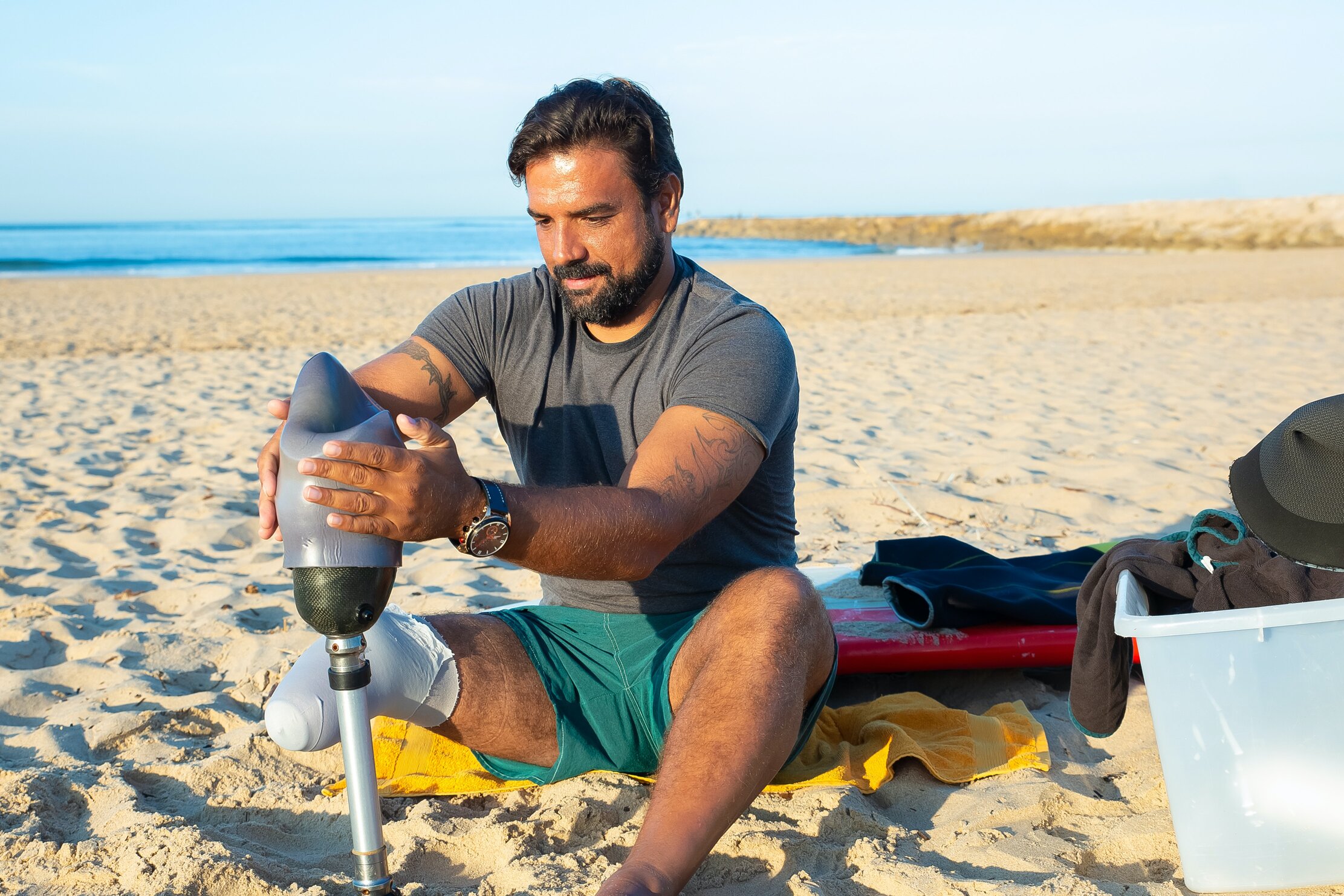
Delivered by Psychotherapists and Psychologists who personally live with limb loss. Prevents microprocessor/bionic prosthetic abandonment, integrates 3-Stage Graded Motor Imagery (GMI) & Mirror Therapy for phantom pain (8E43.0), and supports elective limb-salvage decisions & Osseointegration/TMR readiness.

3. Brain Injury: Mild-to-Moderate TBI, PPCS, ABI & Stroke (Strictly 18+)
Delivered by dedicated cognitive and neuro-trauma Psychotherapists alongside our tetraplegic Psychologist, BSL, and blind specialists. Features 60-minute sessions with 2x 5-minute sensory rest breaks, brief written takeaways, a strict no-homework rule, and normal-scan validation.
4. Post-Traumatic Epilepsy (PTE) & Dissociative Seizures (16+)
Delivered by senior neurological trauma specialists in a flicker-free environment (NICE NG217). Treats the "second blow" of delayed PTE onset, levetiracetam ("Keppra") rage & topiramate fog, CODES-aligned Functional Dissociative Seizures (6B60.4), SUDEP dread, and DVLA bans.

5. Traumatic Sight Loss, Optic Nerve Trauma & Facial Burns (Severe - 16+)
Delivered by Blind and Visually Impaired Psychotherapists and Psychologists via screen-free audio or video consultations. Specialist lived insight across sudden bilateral/monocular blindness, chemical/thermal ocular trauma, Charles Bonnet hallucinations, white-cane stigma, and facial disfigurement.

6. Deaf BSL, Acquired Deafness & Communication Trauma (Severe - 16+)
Direct 1-to-1 British Sign Language (BSL), ISL, SSE, and Oral Deaf trauma therapy with no interpreter lag - delivered alongside our linked sister company Deaf4Deaf (Co-Founder & Director Victoria Nelson is Co-Founder, Managing Director, and Owner of Deaf4Deaf under shared DisabilityPlus governance).
Tier 2: Intersecting Polytrauma, Clinical Negligence & Litigation-Support Pathways
Frequently co-instructed alongside multi-track collisions, birth-injury deputyships, and vocational rehabilitation:
A. Injured Neurodivergent Claimants (ASD & ADHD - 16+)
Post-collision trauma frequently collapses compensatory masking in diagnosed or undiagnosed ASD/ADHD claimants, causing generic panels to mislabel sensory overwhelm as "physio non-compliance". Supported by dedicated neurodiversity Psychotherapists & Psychologists (male & female ASD specialists; no formal diagnosis required).
B. Vestibular, Balance & Blast Tinnitus Trauma (16+)
RTA airbag deployments, whiplash, and temporal bone fractures routinely trigger chronic vertigo, disequilibrium, and debilitating tinnitus/hyperacusis. Features 1 of only 2 UK specialist Vestibular Psychotherapists alongside Tinnitus habituation specialists.
C. Adults With Cerebral Palsy & Birth Injury / Clin Neg (16+)
Supporting Court of Protection & clinical negligence caseloads across the 16-18 paediatric-to-adult transition cliff edge, post-impairment syndrome, spasticity fatigue, and NICE NG119 - delivered by a team where all therapists personally have Cerebral Palsy.
D. Unpaid Spouse & Parent-Carer Therapy (16+)
Bridging the Paul v Royal Wolverhampton secondary-victim gap under The Rehabilitation Code (2015) and Care Act 2014 s.10 - parallel 1-to-1 therapy with a 100% separate confidential clinician to prevent care-package collapse.
E. DWP Access to Work Vocational Step-Down (16+ GB)
1-to-1 non-clinical Workplace Coping Strategy Coaching funded up to £69,260/year via DWP Access to Work grants - carrying no cost to the employer and no cost to the litigation budget during phased return to work.
F. PIP Refusal Mental Health Reports (Appeals)
Strictly for injured claimants who have already been turned down or downgraded for PIP while awaiting settlement - providing structured STAR reliability functional mental health reports to protect baseline income.
Unblocking Stalled Physiotherapy & OT Milestones Across CRPS, Brachial Plexus & Orthopaedic Trauma
In Complex Regional Pain Syndrome (CRPS Type I & II, ICD-11 8D8A.0), brachial plexus avulsions, degloving/burn injuries, and multi-fracture orthopaedics, dorsal-horn wind-up and sympathetic hyperarousal lock claimants in severe kinesiophobia (fear of movement). Using Trauma-Focused ACT (incorporating CBT principles) aligned with NICE NG193, we calm collision flashbacks and catastrophic pain guarding so claimants re-engage actively with neuro-physiotherapy, hydrotherapy, and occupational therapy.
Protecting Gratuitous Family Care Packages Under The Rehabilitation Code (2015)
1. Why Secondary Victim Case Law Leaves Families Exposed
Following the Supreme Court's ruling in Paul v Royal Wolverhampton NHS Trust (2024 UKSC 1), spouses and parents who witness medical crises or the aftermath of catastrophic injury rarely recover standalone secondary-victim damages. Yet if an uncompensated spouse collapses from secondary ICU/crash PTSD (QE84), ambiguous loss, or caregiver burnout (QD85), replacing gratuitous family care with 24/7 agency care adds hundreds of thousands of pounds to the claim.
2. Rehab Code Household Stabilisation + 100% Separate Clinician
Case Managers routinely fund parallel 8-to-12 session household-stabilisation packages for unpaid spouses/parents under The Rehabilitation Code (2015) (alongside statutory Care Act 2014 s.10 rights), delivered by a 100% separate, confidential clinician (visit Carer Counselling).
Consented Multidisciplinary Liaison & Surviving Adversarial Medico-Legal Examinations
With claimant consent, our treating clinicians attend concise MDT case conferences and coordinate goals alongside Case Managers, Neuro-Physiotherapists, Prosthetists, OTs, SLTs, and PAs. Crucially, because multi-hour defence Independent Medical Examinations (IMEs), surveillance fears, and Joint Settlement Meetings (JSMs) routinely trigger 3-day neuro-fatigue crashes, panic, or defensive masking ("looking fine" for 30 minutes then collapsing at home), we prepare claimants with pre- and post-IME rest buffers, symptom diaries, and grounded communication scripts.
Deputyship Safeguarding & Grant-Funded Vocational Step-Down (£69,260/yr Cap)
1. MCA 2005 & Court of Protection Deputy Interface
Aligned with the Mental Capacity Act 2005 (and Adults with Incapacity principles in Scotland), our clinicians work closely with Property & Affairs and Personal Welfare Deputies - documenting decision-specific capacity observations, Best Interests protocols, and safeguarding vigilance against financial coercion or mate/carer exploitation.
2. Vocational Step-Down via DWP Access to Work
When a claimant prepares for phased return to employment or self-employment (£6,500+ turnover), DWP Access to Work Coaching provides up to £69,260/yr in grant-funded 1-to-1 Workplace Coping Strategy Coaching with no employer cost-share and no ongoing cost to the litigation budget.
Predictable Operational Governance From Initial Enquiry to Final Discharge
1. Binding Turnaround SLAs
24-48 hours for itemised INA quotes & anonymised CVs | 7 working days for initial clinical assessment | 5-7 working days post-assessment for written Treatment Plan & GBO delivery.
2. Disability-Adapted Attendance (DAAP)
Standard 48-hour notice paired with compassionate fee waivers for emergency hospitalisation, autonomic dysreflexia, shunt/seizure crises, or acute socket/pressure breakdown - plus a 24-hour proactive welfare check on unexpected non-attendance.
3. Audit-Ready Litigation Invoicing
Billed monthly in arrears on 28-day credit terms via Virgin Bank BACS, itemising Case Manager/solicitor references, compensator claim numbers, DWP CRU references, and exact session dates.
Unit-Level Benchmarking for Case Managers, Fee-Earners & Insurer Claims Handlers
| Commercial & Clinical Dimension | Generic Private Counsellors | Traditional Private Neuro Clinics | High-Volume Insurer CBT Panels | DisabilityPlus Specialist Service |
|---|---|---|---|---|
| Initial Assessment Fee | £129 - £160 / hr | £300 - £600+ markup | Low bundled / script-led | £125.00 Flat Fee (No markup) |
| Mid-Term & Discharge Reports | Often £100 - £200 extra | £150 - £400+ per report | Minimal tick-box only | Included at No Extra Charge |
| Illustrative 12-Session (50m) Benchmark (Actual dosage set strictly by post-assessment Plan) |
£1,548 - £1,920+ | £2,100 - £3,000+ | Low upfront / high repeat failure | £1,500.00 All-Inclusive (£1,800 60m) |
| Lived & Specialist Matching | Rare (Able-bodied generalists) | Able-bodied clinic model | Subcontracted generalists | Lived-Experience (SCI, Limb, Sight, CP, BSL) + Neuro/ASD/Vestibular Specialists |
| Drop-Out & Speed to Stability | High (Burden of explanation) | Moderate (Clinic travel crashes) | Very High (Up to 50% drop-out) | Minimal (~15% fewer sessions needed) |
| Psychometric Methodology | Raw unadjusted PHQ-9/GAD-7 | Heavy diagnostic testing focus | Raw unadjusted symptom checklists | AAQ-II Process + ITQ + ReQoL-10 + WHODAS % |
| Post-Block Anti-Extension Shield | Full private fees only | £180 - £250/hr ongoing | Abrupt discharge cliff-edge | Direct NHS application (most England & Wales areas) OR UK-wide subsidised £50/£60/£70 self-pay |
Commercial Clarity Note: Funded Case Manager, Rehabilitation Code 2015 INA, solicitor, deputy, and insurer instructions operate strictly on our £125 (50m) | £150 (60m) | £175 (70m AAC) tariff (download 1-Page Case Manager Brief PDF or copy INA wording above). Once allotted Rehab Code sessions conclude, clients across all four UK nations may step down onto our heavily subsidised private self-pay tariff, or across most NHS areas in England and Wales (excluding Scotland and Northern Ireland NHS areas) we can apply directly to the NHS via our 10-year NHS relationship.
Frequently Asked Questions, Medico-Legal Glossary & Verification Directory
Part A: Case Managers, Solicitors, Deputies & Compensators (Q1 to Q6)
Q1. Can we instruct DisabilityPlus pre-liability or on a single-party basis under The Rehabilitation Code (2015)?
Yes. Under both The Rehabilitation Code (2015) and the APIL Best Practice Guide (5th Edition), our flat £125 Initial Assessment can be instructed jointly pre-liability or via interim/single-party funding, with itemised INA costings and anonymised HCPC/BACP/BPS CVs returned within 24-48 hours.
Q2. How do you maintain the treating firewall across England & Wales, Scotland, and Northern Ireland?
Our clinicians act strictly as treating rehabilitation providers across all UK jurisdictions and never author expert witness opinions on liability, causation, or quantum under CPR Part 35 (England & Wales), Chapter 42A / Ordinary Cause rules (Scotland), or NI rules. Case Managers receive structured Assessment, Mid-Term, and Discharge Reports (at no extra charge), while raw process notes remain protected unless formally requested under CPR Part 31 / equivalent court disclosure rules.
Q3. How does your post-discharge step-down protect insurers from endless therapy extensions?
Clinicians treat strictly to agreed GBOs and discharge without rolling extension requests. If a client wants longer-term personal support after their allotted Rehab Code block finishes, they can step down onto our heavily subsidised private self-pay rates (£50/£60/£70) anywhere in the UK, or across most NHS areas in England and Wales (excluding Scotland and NI NHS areas) we can apply directly to the NHS via our 10-year NHS relationship.
Q4. Why is DisabilityPlus statutorily exempt from CQC registration?
Under Schedule 1, Paragraph 4(3) of S.I. 2014/2936, 100% remote standalone talking therapy delivered by HCPC/PSA-registered Psychologists and Psychotherapists without medical prescribing or physical care premises falls outside CQC Schedule 1 scope (confirmed twice in writing by the CQC Registration Directorate).
Q5. How can Case Managers fund partner/parent therapy after Paul v Royal Wolverhampton [2024] UKSC 1?
While secondary-victim litigation claims are tightly restricted, funding parallel carer stabilisation under The Rehabilitation Code (2015) protects gratuitous family care packages from collapse - delivered by a 100% separate confidential clinician.
Q6. What age groups and injury severities do you accept on B2B Personal Injury instructions?
We accept B2B claimants aged 16+ across severe/catastrophic SCI, Limb Loss, Sight Loss, Post-Traumatic Epilepsy, Deaf BSL, Cerebral Palsy, ASD/ADHD, Vestibular/Tinnitus, and Carer pathways, and strictly adults aged 18+ with mild-to-moderate presentations on Brain Injury (private under-16 enquiries are supported separately via self-paid coaching on approved pathways).
Part B: Injured Claimants & Family Carers (Q7 to Q10)
Q7. Will my therapist understand my physical disability or Deaf BSL communication without me explaining basics?
Yes - across SCI, Limb Loss, Sight Loss, Cerebral Palsy, and Deaf BSL (delivered alongside linked sister company Deaf4Deaf, where Co-Founder Victoria Nelson is Managing Director of both), you are matched with a clinician who shares lived disability or native BSL fluency, while Brain Injury, Epilepsy, and ASD/ADHD clients see dedicated specialists.
Q8. What happens if a hospital admission, pain flare, or autonomic dysreflexia episode forces me to miss a session?
Under our Disability-Adapted Attendance Policy (DAAP), acute medical emergencies carry compassionate fee waivers and trigger a supportive 24-hour welfare check rather than punitive discharge.
Q9. Can I have sessions from hospital bedrest, on non-prosthetic days, or with rest breaks?
Yes - 100% online/telephone delivery works seamlessly from prone/supine pressure-relief bedrest, surgical bays, or home, including 60-minute brain-injury sessions with 2x 5-minute sensory rest breaks and 70-minute eye-gaze/AAC appointments.
Q10. Is my spouse or parent's counselling kept completely private from mine?
Always. Family carers work 1-to-1 online with a completely separate clinician under strict confidentiality.
Expand Quick-Reference A-to-Z Medico-Legal & Catastrophic Rehabilitation Glossary
A - C: AAQ-II, APIL 5th Ed. & CPR Part 35 / Ch. 42A Firewall
AAQ-II: Bias-free flexibility metric (7-49 pts) | APIL 5th Ed. (2025): Pre-liability rehab benchmark | Treating Firewall: Excludes expert liability/quantum opinions across E&W, Scotland & NI.
D - I: DAAP, DWP CRU, GBOs, INA & ITQ
DAAP: 24hr welfare check & acute medical waiver | DWP CRU: 435,565 GB PI claims (2025/26) | INA: Immediate Needs Assessment (24-48hr quote SLA) | ITQ: ICD-11 PTSD vs C-PTSD screener.
K - P: Kinesiophobia, MCA 2005 & Paul v Wolverhampton
Kinesiophobia: Trauma-driven fear of movement blocking physio | MCA 2005: Deputyship capacity framework | Paul [2024] UKSC 1: Secondary-victim gap bridged via Rehab Code carer support.
R - W: Rehab Code 2015, ReQoL-10, S.I. 2014/2936 & WHODAS 2.0%
ReQoL-10: Isolates physical Item 11 | S.I. 2014/2936 Para 4(3): Statutory CQC exemption for standalone HCPC/PSA therapy | WHODAS 2.0%: 6-domain ICF functional baseline.
Verified Statutory & Peer-Reviewed Sources: The Rehabilitation Code (2015 - IUA Official Portal) & Official 2015 Code PDF | DWP CRU Performance Data (2025/26) | HSE Workplace Injury Statistics | NICE NG211, NG193, CG173, NG119 & NG222 | Paul v Royal Wolverhampton NHS Trust (2024 UKSC 1) | Finlay, Brook-Rowland & Tilley (2025) | Crawford et al. (PubMed 26932486) | Bond et al. (AAQ-II) | Cloitre et al. (ITQ) | Keetharuth et al. (ReQoL-10) | WHO ICD-11 & WHODAS 2.0.